
Conditions
You are here: Home > Conditions > Foot and Ankle Pain > Plantar Fasciitis
This is also known as "plantar heel pain" or "plantar fasciopathy". Plantar fasciitis can cause pain on the underside of the heel. The plantar fascia is a strong band of tissue that helps to support the arch of your foot. It can affect anyone but is most common between the ages of 40–60. This is a common problem and is estimated to affect 4-7% of people in the general population. Symptoms can take several months to improve and, for some people, may take longer than a year to fully settle.
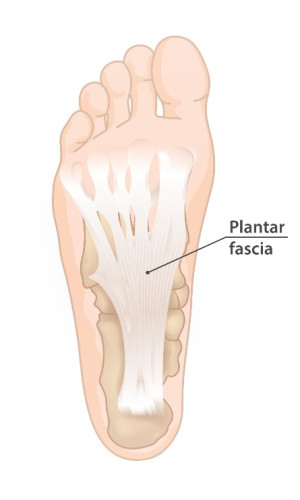
Image credit: https://www.injurymap.com/free-human-anatomy-illustrations
The main symptoms of plantar fasciitis are:
The plantar fascia is not usually damaged by one single event; symptoms often develop when the amount of load placed on the foot exceeds what the tissues can tolerate.
This problem can occur with overuse i.e. prolonged walking or standing. It can also be provoked with unsupportive shoes or a sudden increase in activities. Being overweight is a risk factor for this problem.
Scans are not usually needed to diagnose plantar heel pain. A healthcare professional may consider further investigation if symptoms are unusual, severe or not improving as expected.
Try to keep moving while temporarily reducing activities that significantly increase your pain. Complete rest is usually not helpful. The plantar fascia responds well to gradual increases in load, so gradually building activity levels as symptoms improve can support recovery. If prolonged standing or walking aggravates your symptoms, reducing these activities for a short period may help settle a flare-up.
Over-the-counter medicines: Over-the-counter pain relief may help you stay active. Always follow the advice provided with the medicine.
Topical creams: Some people find topical creams or gels helpful for short-term relief of pain and stiffness.
It is important to check whether you can take these medicines. If you are unsure whether you can take these medicines, speak to a pharmacist or another healthcare professional.
Poorly fitting footwear can sometimes contribute to foot and ankle pain. Choose comfortable, supportive footwear with enough room for your toes where possible. Avoid going barefoot on hard surfaces if this increases your symptoms.
Some people find shoe insoles helpful because they support the arch of the foot and reduce strain on the plantar fascia.
Exercises should gradually load the plantar fascia and surrounding muscles to improve their ability to tolerate everyday activities. It is normal to experience some discomfort during these exercises provided symptoms settle afterwards and are not significantly worse the following day. Exercises for plantar fasciitis by Arthritis UK may help.
If you are carrying extra weight, even a modest amount of weight loss can reduce the load through the foot and ankle and improve symptoms. You can calculate your BMI using the NHS BMI calculator.
Weight can affect symptoms in two ways: it can increase the physical load on your joints and tendons, and excess body fat can contribute to low-level inflammation in the body. This means that improving overall metabolic health may help symptoms as well as reducing physical load.
If your symptoms are not improving, or you feel you need more support, you can refer yourself to the podiatry service. They can assess your symptoms, develop a treatment plan and refer you to other services if appropriate.
Extracorporeal shockwave therapy (ESWT) is available through the podiatry service. This may be considered for some people whose symptoms have not improved with other treatments. The podiatry service would determine who would be appropriate for this treatment. This is not a suitable option for everyone.
Injections may reduce severe inflammation and pain for a period. The physiotherapy service can organise foot and ankle injections for appropriate patients. It is not an appropriate option for everyone. It is usually recommended to try other treatments first, as these address the underlying factors contributing to symptoms. There is a small risk of weakening or rupture of the plantar fascia and thinning of the protective fat pad under the heel.
If you have diabetes and develop foot pain, discuss this with your GP or diabetes team. People with diabetes are at increased risk of developing foot problems and may need assessment sooner. Your GP or diabetes team can ensure you are receiving the most appropriate treatment.
Plantar heel pain is influenced by a range of factors, including activity levels, the amount of load placed through the foot, muscle strength and overall health. Improving general health, staying active, gradually strengthening the foot and calf muscles, and addressing lifestyle factors can help improve symptoms and support recovery. More support with health and lifestyle factors can be found on our Your Musculoskeletal Health webpage.
When to seek further advice
Some symptoms require urgent medical assessment rather than physiotherapy or podiatry. Please seek urgent medical advice if you have any of the following:
If any of the above apply to you, contact NHS 111 for advice or attend your nearest Emergency Department if your symptoms are severe.