
Conditions
You are here: Home > Conditions > Wrist & Hand Pain > Hand Osteoarthritis
Osteoarthritis is a very common condition which can affect any joint in the body. Hand osteoarthritis is one of the most common forms of osteoarthritis.
Everyone’s joints go through a normal cycle of wear and repair during their lifetime. As joints repair themselves, their shape and structure can change. The cartilage in the joints of the hand may become thinner and the surfaces of the joint may become rougher. If this happens in one or more of your joints, it’s known as osteoarthritis.
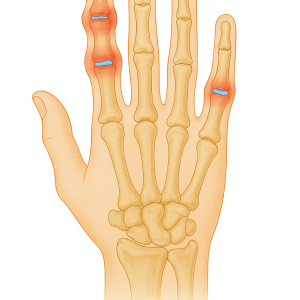
Image credit: https://www.injurymap.com/free-human-anatomy-illustrations
Osteoarthritis in the hand and wrist can cause pain, stiffness, and reduced movement.
What are the symptoms of hand osteoarthritis?
Joint pain, especially with use or at the end of the day
Stiffness, particularly after periods of rest or in the morning
Swelling or tenderness around affected joints
Reduced grip strength or difficulty with fine motor tasks
Bony lumps or nodes around finger joints (Heberden’s and Bouchard’s nodes)
Pain at the base of the thumb is one of the most common symptoms of hand osteoarthritis and can make tasks such as opening jars, turning keys or gripping objects difficult.
What causes osteoarthritis?
The exact cause of osteoarthritis is often not known, as there can be lots of reasons why a person develops the condition. Reasons include:
Arthritis UK have further information on osteoarthritis.
Although osteoarthritis cannot be reversed, many people successfully manage their symptoms and continue their normal activities. There are also some treatments available that could significantly reduce your pain and improve your mobility. It’s likely that you’ll need to use a combination of different things to get the best results.
If symptoms have recently worsened it may be worth reducing activities that make the pain worse. Trying to get a balance between rest and activity can help your pain to settle down. Using larger joints where possible (for example carrying bags on your forearm rather than gripping tightly) may help. Avoiding prolonged tight gripping, and using ergonomic kitchen or gardening tools can also reduce strain on painful finger joints.
Over-the-counter medicines: Over-the-counter pain relief may help you stay active. Always follow the advice provided with the medicine.
Topical creams: Some people find topical creams or gels helpful for short-term relief of pain and stiffness.
It is important to check whether you can take these medicines. If you are unsure whether you can take these medicines, speak to a pharmacist or another healthcare professional.
Gentle hand exercises can help maintain movement, improve grip strength and reduce stiffness. These may include opening and closing your hand, finger stretches and gentle strengthening exercises using therapy putty or a soft ball.
Splints can help support painful joints, particularly at the base of the thumb or finger joints, during activities or at night. A healthcare professional can advise which type of splint may be most appropriate for you.
Some people find warmth helpful for reducing stiffness, while a cold pack may help if a joint is particularly painful after activity. Always protect your skin from heat or cold to avoid ice or heat burns.
If your symptoms aren't improving or you feel you need more help, then please refer yourself to physiotherapy. We will assess your symptoms and work with you to develop a treatment plan. You can have one-to-one physiotherapy. We can also refer you to other services to access other treatments listed below if appropriate.
In some cases, corticosteroid injections may help reduce pain, particularly if one joint is especially painful. They are not suitable for everyone.
The type of surgery depends on the joint affected. If your physiotherapist feels this may be an appropriate option they will discuss your referral options with you. This is usually only considered if symptoms remain severe despite other treatments.
Carrying excess body weight, diabetes, smoking, previous injuries and overall health can all influence osteoarthritis symptoms. Improving general health, staying active, and addressing lifestyle factors can help improve symptoms. More support with health and lifestyle factors can be found on our Your Musculoskeletal Health webpage.
When to seek further advice
Some wrist and hand problems need urgent medical assessment rather than physiotherapy. Please read the information below.
This information may not be appropriate for you if you have any of the following:
If you have any of these symptoms, contact NHS 111 as soon as possible for advice.