
Conditions
You are here: Home > Conditions > Shoulder Pain > Frozen Shoulder
Frozen shoulder is a condition that causes pain and stiffness in your shoulder. Frozen shoulder affects the lining of the shoulder joint (called the joint capsule). The capsule becomes inflamed, then gradually thickens and tightens, making it painful and difficult to move your arm. It can be extremely painful, but it is not usually a sign of serious damage. Most people gradually recover with time.
Symptoms usually develop gradually, although some people notice the pain begins quite suddenly. It sometimes develops after an injury, surgery or a period when the shoulder has not been moved very much.
Frozen shoulder is more common in people aged 40 to 65, and slightly more common in women. It’s also more likely in people with diabetes, thyroid problems, or people who smoke. There may be a genetic link, although this has not yet been proven.
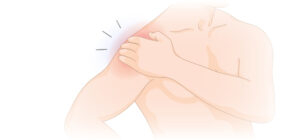
Image credit: https://www.injurymap.com/free-human-anatomy-illustrations
Frozen shoulder usually improves over time, but recovery often takes between 9 months and 3 years. Most people recover well, although some continue to have mild pain or stiffness.
Some mild cases improve without treatment. However, because the pain can be severe treatment is usually recommended:
Frozen shoulder can be very painful. It may be worth reducing or changing activities that make your pain worse. Trying to get a balance between rest and activity can help your pain to settle down. Taking regular breaks and avoiding movements that push your shoulder to its limit may help.
Over-the-counter medicines: Over-the-counter pain relief may help you stay active. Always follow the advice provided with the medicine.
Topical creams: Some people find topical creams or gels helpful for short-term relief of pain and stiffness.
It is important to check whether you can take these medicines. If you are unsure whether you can take these medicines, speak to a pharmacist or another healthcare professional.
Shoulder exercises can improve strength and movement. See the British Elbow and Shoulder Society frozen shoulder exercises.
If your symptoms aren't improving or you feel you need more help, then please refer yourself to physiotherapy. We will assess your symptoms and work with you to develop a treatment plan. You can have one-to-one physiotherapy and have access to our gym classes. We can also refer you to other services to access other treatments listed below if appropriate.
Corticosteroid injection into the shoulder joint may reduce pain and inflammation. These can be helpful in the early stages of a frozen shoulder to reduce pain.
This procedure involves injecting a mixture of steroid, local anaesthetic and sterile salt water into the shoulder joint. It can help reduce pain and improve movement for some people.
Considered only if symptoms are severe or do not improve with other treatments. This involves moving the shoulder while you are asleep under a general anaesthetic.
Frozen shoulder is influenced by many aspects of our general health. Diabetes, carrying excess body weight and smoking have all been linked to increasing the risk of developing a frozen shoulder. Symptoms are often also affected by sleep disturbance and long-term stress. Looking after your physical and mental wellbeing may support recovery and symptom management. More support with health and lifestyle factors can be found on our Your Musculoskeletal Health webpage.
When to seek further advice
Most shoulder pain can be managed safely with self-care. However, contact NHS 111 if you have any of the following:
These symptoms may need urgent assessment and are not typical of a frozen shoulder.