
General Wrist & Hand Pain Advice
Wrist and hand pain is very common. Most problems improve with time and can be managed with self-care. Many people begin to notice improvement within a few weeks, although some conditions can take several months to recover. The advice below is suitable for many common wrist and hand problems.
Select one of the conditions to learn more about common wrist and hand problems. We explain the symptoms, treatment options and how our service can help. We will describe how these conditions present, how they are usually treated, and what our service can offer. You can also refer yourself to physiotherapy.
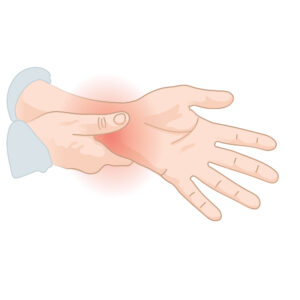
Image credit: https://www.injurymap.com/free-human-anatomy-illustrations
Steps to take to recovery
Adjust Activities
Try to reduce or change activities that make your pain worse, but try to keep your wrist and hand moving. If you have had a recent injury your wrist or hand may need a little time to settle. In the early stages avoiding activities that significantly increase your pain.
Use Ice or Heat: Some people find this helpful to reduce their pain. If you have had a recent injury, it may help to apply an ice or cold pack (15-20 minutes a few times a day in the initial 48 hours). If you have a longer-standing issue, then heat packs may help soothe some of your pain. Wrap ice or heat packs in a towel and do not place them directly onto your skin to avoid ice or heat burns.
Exercises
Start with gentle stretches to improve movement and pain. Do not force any movements that cause pain. Focus on moving the wrist and hand in a pain-free range. Some mild discomfort during exercise is normal, but your symptoms should settle afterwards.
Keeping your wrist and hand moving can help reduce stiffness. Arthritis UK wrist and hand exercises may help your symptoms.
Pain Relief
Over-the-counter medicines: Over-the-counter pain relief may help you stay active.
Topical creams: These can provide temporary relief for pain and stiffness.
It is important to check whether you can take these medicines. If you are unsure whether a medicine is suitable for you, speak to a pharmacist or another healthcare professional.
Our service
Our service offers a range of treatment options for wrist and hand pain. Following your assessment, you will usually be given a personalised exercise programme. In some situations, we may recommend splints, refer you for further investigations, or discuss other treatment options if appropriate.
Lifestyle factors that influence health
Many wrist and hand problems are influenced by your overall health. Smoking, diabetes, poor sleep, long-term stress and physical activity levels can all affect pain and recovery. Staying active and improving your general health can support recovery. More information is available on our Your Musculoskeletal Health page.
When to seek further advice
Some wrist and hand problems need urgent medical assessment rather than physiotherapy. Please read the information below.
This information may not be appropriate for you if you have any of the following:
- A recent injury or fall that has caused severe pain or a sudden loss of movement.
- You cannot move your wrist or hand after an injury.
- Your wrist or hand is red, hot or swollen, especially if you also have a fever or feel generally unwell.
- You felt or heard a pop and can no longer move your fingers or thumb normally.
If you have any of these symptoms, contact NHS 111 as soon as possible for advice.
Carpel Tunnel Syndrome
De Quervain's Tenosynovitis
Trigger Finger
Hand Osteoarthritis