
Conditions
You are here: Home > Conditions > Foot and Ankle Pain > Tibialis Posterior Tendinopathy
A tendon connects muscle to bone. The tibialis posterior tendon runs behind the inside of the ankle and attaches to the bones on the inside of the foot. It helps support the arch of the foot when walking. Any tendon can develop a tendinopathy. Tendinopathy means the tendon has become painful and is not coping well with the loads placed upon it. It may also become thicker or swollen.
People with tibialis posterior tendinopathy usually notice pain along the inside of the ankle or foot. Pain is often worse when walking, climbing stairs or standing on tiptoes. Some people notice that the arch of the affected foot appears flatter than usual. Some people naturally have flatter feet than others. Having flat feet does not necessarily mean you will develop tibialis posterior tendinopathy, but changes in the arch together with pain may indicate the tendon needs assessment.
People can develop tendon problems for many reasons. This often develops when the tendon is asked to do more than it is ready for. This may happen after increasing walking, running or standing, returning to activity after a period of rest, or because of reduced muscle strength. People with diabetes, obesity or those who smoke are more likely to have tendon issues.
Recovery often takes several months, but most people improve with the right combination of activity modification, strengthening exercises and appropriate footwear. If you notice your foot becoming progressively flatter or you are finding it increasingly difficult to stand on tiptoes, it is worth arranging an assessment rather than waiting several months.
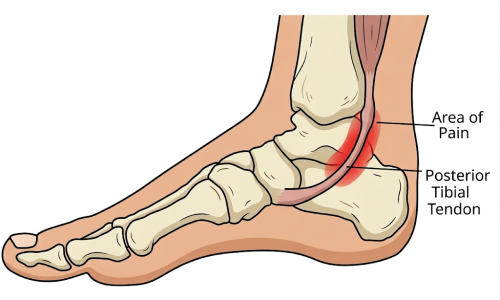
Image credit: https://www.injurymap.com/free-human-anatomy-illustrations
Try to keep moving while temporarily reducing activities that significantly increase your pain. Completely avoiding activity for long periods can slow recovery because tendons respond well to gradual loading. Gradually return to your normal activities as symptoms improve. If standing or walking aggravates your symptoms, reducing these activities for a short period may help settle a flare-up.
Over-the-counter medicines: Over-the-counter pain relief may help you stay active. Always follow the advice provided with the medicine.
Topical creams: Some people find topical creams or gels helpful for short-term relief of pain and stiffness.
It is important to check whether you can take these medicines. If you are unsure whether you can take these medicines, speak to a pharmacist or another healthcare professional.
Progressive strengthening exercises are one of the most effective treatments for tibialis posterior tendinopathy. Exercises should gradually load the tendon to improve its strength and ability to cope with everyday activities. It is normal to experience some discomfort during these exercises provided symptoms settle afterwards and are not significantly worse the following day. Exercises for the feet and ankles from Arthritis UK may help. Gentle stretching may help some people, but strengthening exercises are usually more important than stretching for long-term recovery.
Poorly fitting footwear can sometimes contribute to foot and ankle pain. Choose comfortable, supportive footwear with enough room for your toes where possible.
If you are carrying extra weight, even a modest amount of weight loss can reduce the load through the foot and ankle and improve symptoms. You can calculate your BMI using the NHS BMI calculator.
Weight can affect symptoms in two ways: it can increase the physical load on your joints and tendons, and excess body fat can contribute to low-level inflammation in the body. This means that improving overall metabolic health may help symptoms as well as reducing physical load.
Some people find shoe insoles helpful because they support the arch of the foot and reduce strain on the tendon.
Some people benefit from a supportive ankle brace to reduce strain on the tendon during painful flare-ups. Your healthcare professional can advise whether this is appropriate.
If your symptoms are not improving, or you feel you need more support, you can refer yourself to the podiatry service. They can assess your symptoms, develop a treatment plan and refer you to other services if appropriate.
Surgery is only considered when symptoms remain severe despite appropriate non-surgical treatment. The type of procedure depends on the condition of the tendon and foot.
If you have diabetes and develop foot pain, discuss this with your GP or diabetes team. People with diabetes are at increased risk of developing foot problems and may need assessment sooner. Your GP or diabetes team can ensure you are receiving the most appropriate treatment.
Tibialis posterior tendinopathy is influenced by our overall health. Activity levels, rapid increases in walking or running, muscle strength, weight, smoking, diabetes and overall health can all influence symptoms. Improving general health, staying active, gradually strengthening the tendon, and addressing lifestyle factors can help improve symptoms. More support with health and lifestyle factors can be found on ourYour Musculoskeletal Health webpage.
When to seek further advice
Some symptoms require urgent medical assessment rather than physiotherapy or podiatry. Please seek urgent medical advice if you have any of the following:
If any of the above apply to you, contact NHS 111 for advice or attend your nearest Emergency Department if your symptoms are severe.