
Persisting Pain
Persistent pain is pain that lasts for more than three months. It may continue even after the body has had time to heal. This does not necessarily mean there is ongoing damage or injury.
Sometimes the body's pain system becomes more sensitive and overprotective, making everyday movements or activities feel more painful than they need to be.
Persistent pain is real and can affect many parts of daily life. It may make it harder to move, sleep, work, and do everyday activities. It can also affect mood and wellbeing.
Although persistent pain can be frustrating, many people can improve their symptoms and quality of life by understanding pain, gradually increasing activity and building confidence in movement.
Treatment aims to help you improve your quality of life, increase your ability to do everyday activities and reduce the impact pain has on your life. While pain may not disappear completely, many people are able to regain confidence and return to activities that are important to them.
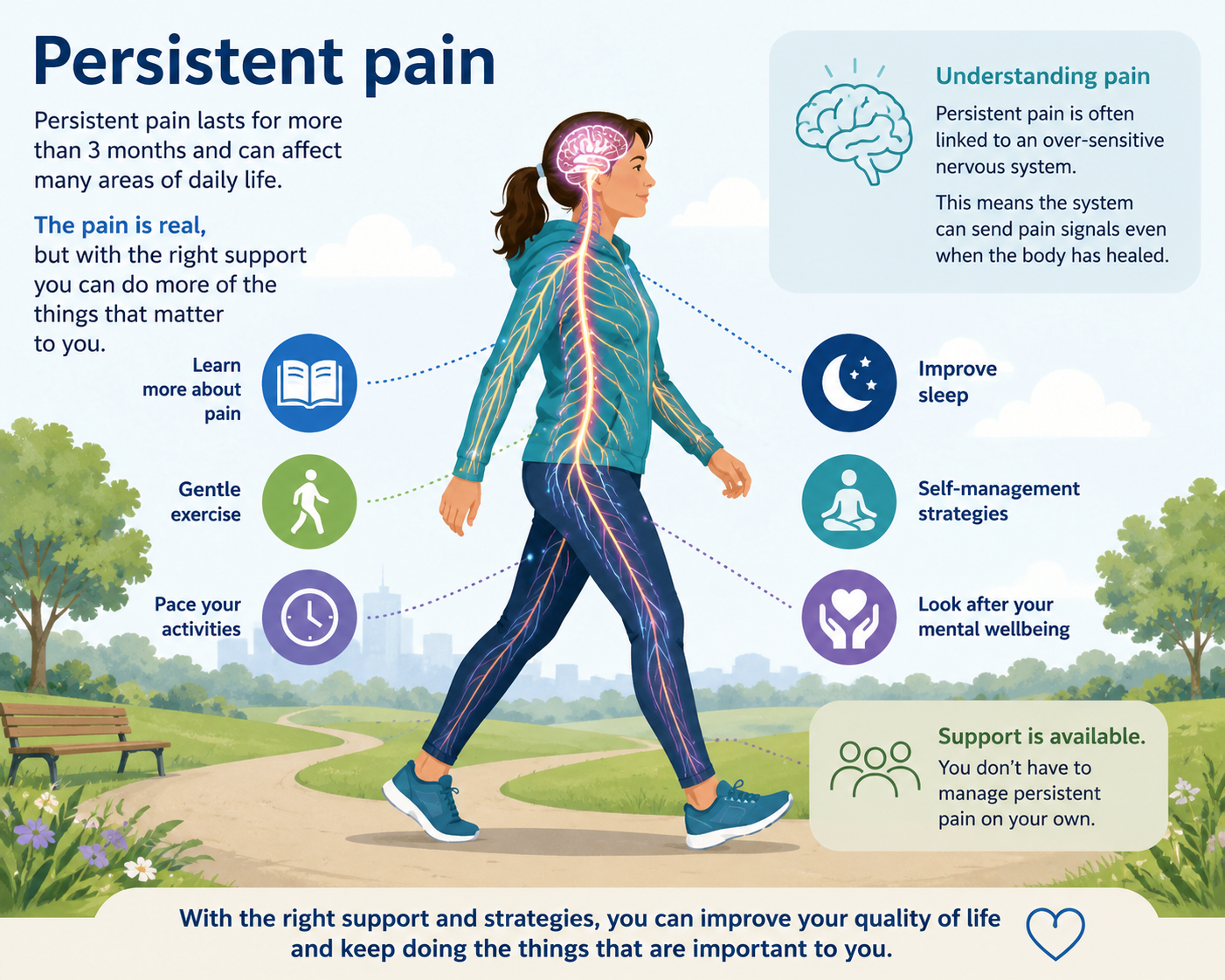
Image credit: Image generated by AI
Support may include:
- Understanding how pain works
- Gradually increasing activity and exercise
- Pacing activities
- Improving sleep
- Stress management and relaxation techniques
- Physiotherapy to improve movement, strength and confidence
- Support with lifestyle changes where appropriate
Medicines, injections or surgery can sometimes help certain types of persistent pain, but they are usually only one part of treatment and are not appropriate or effective for everyone.
Pain is affected by many things, including physical health, sleep, stress, emotions, previous experiences and overall wellbeing. This is why treatment often focuses on improving health as a whole rather than treating one part of the body.
General health has an important influence on persistent pain. Physical activity, sleep, stress, smoking, weight and managing other long-term health conditions can all affect how pain is experienced. Improving these areas can help reduce the impact pain has on everyday life. You may find some other services useful in improving your general health. Please see our Your Musculoskeletal Health page for further information.
The resources on this page provide further information about local services and self-management strategies that may help you manage persistent pain.
York Chronic Pain Management Service
York Chronic Pain Management Service Resources
Flippin' Pain