
Conditions
You are here: Home > Conditions > Shoulder Pain > Rotator Cuff Related Shoulder Pain
The rotator cuff is a group of muscles and tendons that help lift and control the shoulder. Rotator cuff-related shoulder pain is the most common shoulder issue. You may also hear this called rotator cuff tendinopathy or subacromial shoulder pain. Some people still use the term shoulder impingement. The term shoulder impingement is becoming less favoured because it implies the tendon is being "pinched", which isn't always supported by current evidence.
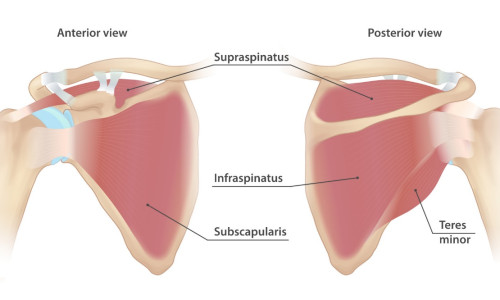
Image credit: https://www.injurymap.com/free-human-anatomy-illustrations
Symptoms often include:
Although the pain can be severe, it does not usually mean you have caused serious damage to your shoulder. Most people improve with time. For most, the pain settles within a few months. For some, the pain can take a year or so to settle. Many people develop symptoms after doing an activity that their shoulder is not used to. Others notice symptoms after doing more than usual. There is not always a clear reason why the symptoms begin.
Reduce or change activities that make your pain worse, but continue to move your shoulder as comfortably as you can. It may be helpful initially to reduce the amount of lifting or carrying you do until the pain settles.
Over-the-counter medicines: Over-the-counter pain relief may help you stay active. Always follow the advice provided with the medicine.
Topical creams: Some people find topical creams or gels helpful for short-term relief of pain and stiffness.
It is important to check whether you can take these medicines. If you are unsure whether you can take these medicines, speak to a pharmacist or another healthcare professional.
Exercises are the main treatment for most people with rotator cuff-related shoulder pain. They help improve strength, movement and shoulder function. See the British Elbow and Shoulder Society exercises for a structured programme that may help support your recovery.
If your symptoms aren't improving or you feel you need more help, then please refer yourself to physiotherapy. We will assess your symptoms and work with you to develop a treatment plan. You can have one-to-one physiotherapy and have access to our gym classes. We can also refer you to other services to access other treatments listed if appropriate.
Injections may reduce severe inflammation and pain for a period. The physiotherapy service can arrange a referral for an injection if appropriate. It is not an appropriate option for everyone.
Surgery is only considered for a small number of people. The type of surgery depends on the cause of your symptoms and may include repairing a torn tendon.
Rotator cuff-related shoulder pain is a common cause of shoulder pain and is often influenced by a combination of factors. Changes in activity levels, muscle strength, previous injuries, diabetes, smoking, and overall health can all contribute to symptoms. Staying active, gradually strengthening the shoulder muscles, and addressing lifestyle factors can help reduce pain and improve function. More support with health and lifestyle factors can be found on our Your Musculoskeletal Health webpage.
When to seek further advice
Most shoulder pain can be managed safely with self-care. However, contact NHS 111 if you have any of the following:
These symptoms may need urgent assessment and are not typical of a rotator cuff-related shoulder pain.