
Conditions
You are here: Home > Conditions > Wrist & Hand Pain > Carpel Tunnel Syndrome
Carpal tunnel syndrome is a common condition that affects the hand and wrist. It happens when the median nerve becomes squeezed as it passes through a narrow tunnel in the wrist.
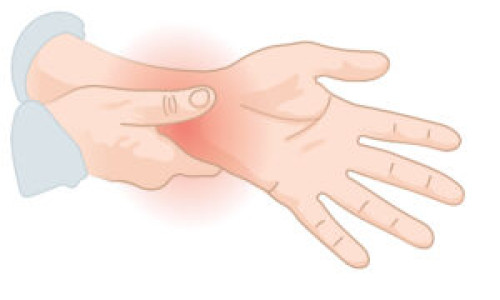
Image credit: https://www.injurymap.com/free-human-anatomy-illustrations
This can cause symptoms like tingling, numbness, or weakness in the hand — especially in the the thumb, index finger, middle finger and part of the ring finger. Symptoms are commonly worse at night or when doing tasks that involve gripping, bending the wrist or putting pressure on the wrist.
If you have constant numbness, increasing weakness, or notice the muscles at the base of your thumb becoming smaller, contact your GP practice promptly.
There is not always a known cause. People are at more risk of developing carpal tunnel syndrome if they are overweight, pregnant, haves diabetes or have had a recent wrist injury. People with work or hobbies that include repeated gripping or prolonged use of vibrating tools are also more likely to develop carpal tunnel syndrome.
Some people improve within a few weeks, while others take several months. If symptoms continue despite treatment, further assessment may be needed. Many people can manage their symptoms successfully with simple measures such as activity modification, exercises and night splints. On this page, you’ll find information on what causes it, how to manage it, and when to seek further support.
Scans are not usually needed to diagnose carpal tunnel syndrome.
If you have constant numbness, significant weakness or visible muscle wasting in your hand, contact your GP practice rather than self-referring to physiotherapy. These symptoms may need more urgent assessment.
If symptoms have recently worsened it may be worth reducing or changing activities that make your symptoms worse. Trying to get a balance between rest and activity can help your pain to settle down. Trying to avoid direct pressure over the carpal tunnel (the palm side of the wrist) can help. It may also help to reduce tasks where the wrist is in a bent position for a sustained period.
Over-the-counter medicines: Over-the-counter pain relief may help you stay active. Always follow the advice provided with the medicine.
Topical creams: Some people find topical creams or gels helpful for short-term relief of pain and stiffness.
It is important to check whether you can take these medicines. If you are unsure whether you can take these medicines, speak to a pharmacist or another healthcare professional.
Exercises and nerve-gliding exercises may help some people manage their symptoms, although they are usually most effective when combined with activity modification or night splinting. The Chartered Society of Physiotherapy carpal tunnel exercises could help.
Wearing a wrist splint at night for 6 to 8 weeks is often one of the most effective treatments for mild to moderate carpal tunnel syndrome. The splint helps keep your wrist in a neutral position while you sleep, reducing pressure on the nerve. If you are unsure which splint is suitable for you, speak to a pharmacist or another healthcare professional.
If your symptoms aren't improving or you feel you need more help, then please refer yourself to physiotherapy. We will work with you to develop a treatment plan. You can have one-to-one physiotherapy. We can also refer you to other services to access other treatments listed below if appropriate.
A corticosteroid injection may help reduce symptoms for some people, although it is not suitable for everyone.
Surgery involves releasing pressure on the nerve. This is usually considered if symptoms are not responding to the above treatments. Your physiotherapist would discuss your referral options with you if required.
Carpal tunnel symptoms can be influenced by our overall health. Alongside work and daily activity demands symptoms can be influenced by diabetes, carrying excess body weight, poor sleep, long-term stress, and smoking. Staying active and addressing lifestyle factors can help reduce pain and improve function. More support with health and lifestyle factors can be found on our Your Musculoskeletal Health webpage.
When to seek further advice
Some wrist and hand problems need urgent medical assessment rather than physiotherapy. Please read the information below.
This information may not be appropriate for you if you have any of the following:
If you have any of these symptoms, contact NHS 111 as soon as possible for advice.